Long Read Analysis Pipeline in Snakemake
Investigating the Use of Long Read Sequencing to Detect non-SNP Pathogenic Variants in an Unknown Neurodegenerative Disorder
For my master’s thesis project, I created a bioinformatics pipeline to detect non-SNP pathogenic variants that could be the cause of an unknown neurodegenerative disorder.
The lab was investigating a case in which a 7-year-old presented with a sporadic constellation of neuromuscular symptoms, including muscle wasting, dyspraxia, liver issues and weight gain. Short-read sequencing had not produced any tangible results and so we aimed to use long-read sequencing to find repeat expansions or structural variants that may have been missed, which could be the culprit.
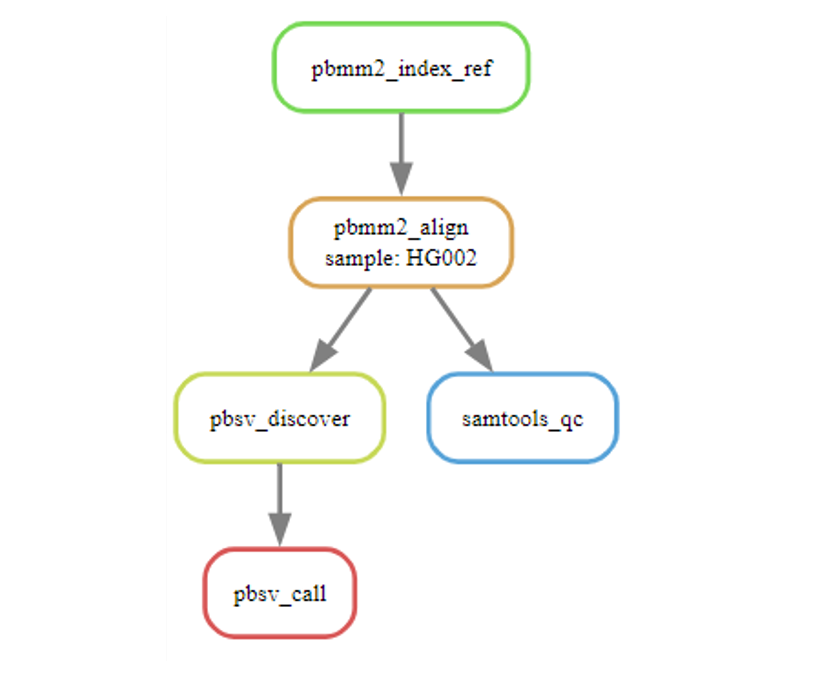
As long-read sequencing was not yet standard in our lab, I first created a variant analysis pipeline in Snakemake using both industry standard and beta tools being developed by PacBio. I ensured it was portable by making it within a condas environment and rigorously testing it against both in-house and GIAB samples for quality control. Once complete, I used the pipeline on the patient’s genome and captured a list of 27 possible repeat expansions.
Through a literature review of the expansions, looking for disorders they could cause, I found that the patient’s symptoms were most similar to Kennedy’s disease. To take a more holistic approach, I also looked at the patient’s ethnic background and found that he was of Finnish descent. This further cemented my finding as the Finnish population had had a founder event for Kennedy’s disorder.
Following my in silico research, the cells must be tested in vivo for confirmation before hopefully leading to a positive diagnosis and possible help for the child. As this was my master’s thesis, I worked on the development and testing of the pipeline, as well as the literature review on my own - with the guidance of my thesis advisor, Dr Alan Pittman.